

Examining Whether the Evidence Proves Participation in Production Activity
Drug production prosecutions are often built around environments rather than a single seized substance. Investigators may rely on equipment, lighting systems, ventilation modifications, hydroponic materials, chemical containers, residue, utility consumption records, lease documents, surveillance observations, or property access information. The presence of production-related materials does not automatically prove who operated the site, who controlled the process, or who had knowledge of the activity. Mennie Law carefully reviews how the location was investigated, how exhibits were collected, and how police connected the accused to the alleged production operation. By examining the actual evidentiary link between the individual and the site, the firm works to challenge unsupported assumptions and investigative overreach.
Tracing the Evidence Behind the Alleged Production Site
Production Cases Often Depend on How Police Entered, Searched, and Seized Evidence
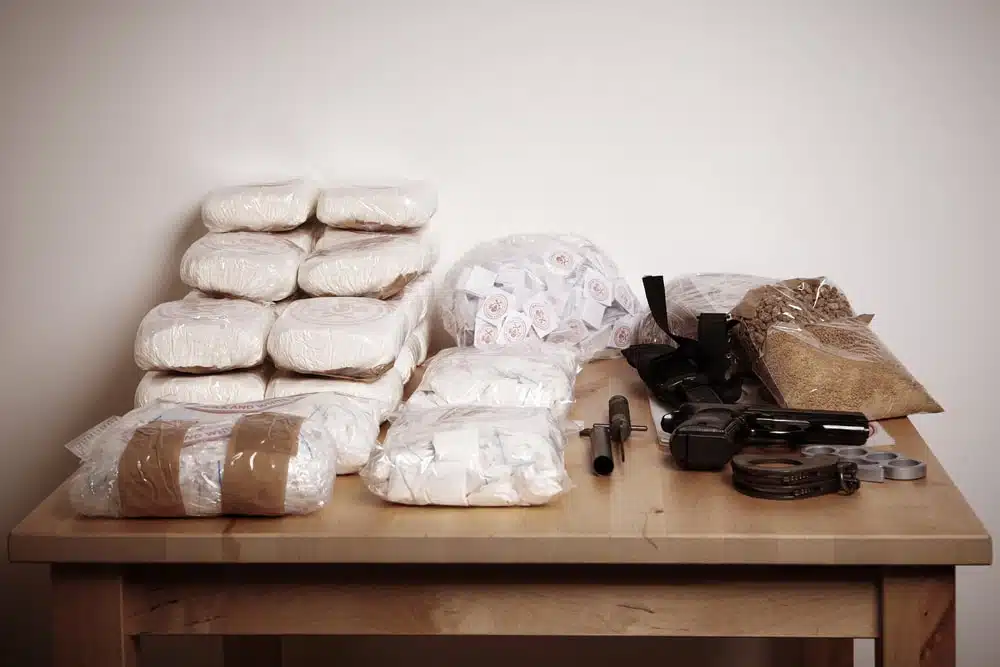
Drug production investigations frequently involve search warrants, property entries, controlled observations, confidential source information, and extensive exhibit collection. If police relied on incomplete information, exceeded the scope of a warrant, or mishandled exhibits, key evidence may become vulnerable to legal challenge.
- Did police search a home, rental property, garage, commercial unit, storage area, farm, or other location connected to the allegation?
- Are prosecutors relying on equipment, utility usage, chemical materials, plant material, extraction tools, or environmental modifications?
- Request an immediate legal assessment to review the search process, examine the evidentiary link, and begin challenging the production allegation.
Why Being Connected to a Property Does Not Automatically Prove Production
Drug production charges often involve shared spaces, rental arrangements, utility accounts, business premises, or properties accessed by multiple people. Courts must determine whether the Crown can prove knowledge, involvement, and control over the alleged production activity.
Myth: If production equipment is found inside a property, everyone connected to the address is automatically responsible.
Myth: Utility records are enough to prove someone was producing drugs.
Important Information About Drug Production Allegations
Drug production prosecutions involve technical evidence, property investigation, search procedures, and complex questions about involvement. These answers address issues that commonly arise in production-related cases.

Book your consultation with Mennie Law
Get trusted legal guidance from a team focused on professionalism, clarity, and results. Speak with Mennie Law today about your matter and the next steps available to you.